Open Today Sales: 8 AM-9 PMOpen Today Service: 7 AM-6 PM
That high-pitched squeal every time you slow down is hard to ignore, and it's natural to wonder if something's seriously wrong. Most of the time, your Honda is actually telling you something useful, not warning you of a breakdown.
A squeaking noise from your brakes is most often caused by a small metal wear indicator built into the brake pad, designed to alert you once the pad material gets thin. It's a safety feature, not a defect, though it does mean service is coming up soon.
At Findlay Honda Henderson, our service team has diagnosed this exact sound for drivers across Henderson, Las Vegas, and Boulder City more times than we can count, from daily commuters to weekend road trippers. This guide explains what actually causes that squeak, how to tell if it's urgent, and what Henderson's desert conditions add to the equation.
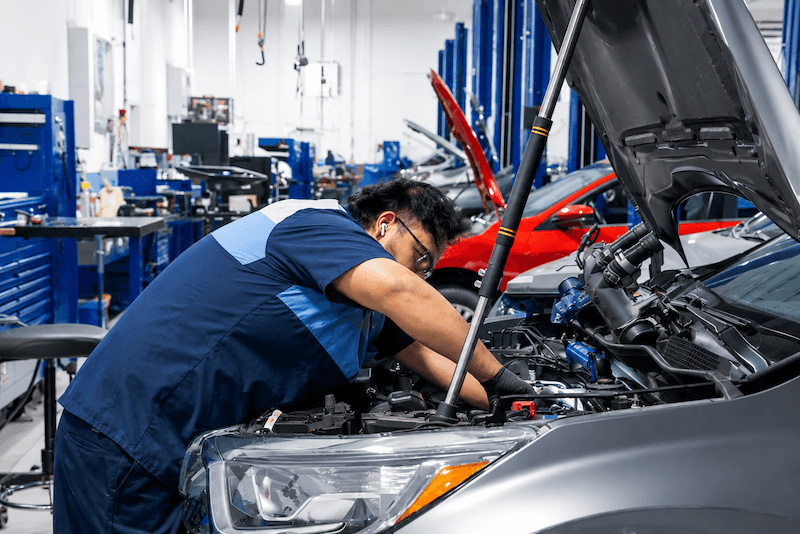
Built-in wear indicators are designed to make noise before the pads are actually worn out.
A squeal is a heads-up. A grinding sound means metal is already touching metal, and that's the one that needs attention right away.
Desert grit collecting on brake components can cause noise even when the pads themselves have plenty of life left.
| Sound Type | Likely Cause | Urgency | Suggested Action |
|---|---|---|---|
| High-pitched squeal, on and off | Brake wear indicator contacting rotor | Moderate | Schedule a brake inspection soon |
| Squeal that comes and goes with weather or dust | Brake dust or road grit buildup | Low | Have pads and rotors cleaned/inspected |
| Squeak from new or recently serviced brakes | Under-lubricated caliper slide pins | Low | Have the installation checked |
| Grinding or scraping sound | Pad material worn through, metal-on-metal contact | High | Schedule service immediately |
This table is a general guide. An in-person inspection is the only way to confirm the exact cause for your vehicle. Contact Findlay Honda Henderson to schedule a brake check.
A couple of things are worth calling out here. Not every squeak means your brakes are unsafe, which is easy to forget when the noise is loud and constant. At the same time, the shift from squealing to grinding is the one moment you shouldn't wait on, since that usually means the protective pad material is already gone.
A brake wear indicator is a small metal tab attached to the brake pad that makes contact with the rotor once the friction material wears down to about 2 millimeters thick. That contact creates a steady, high-pitched squeal, even when you're not pressing the pedal. It's intentional. Honda and most manufacturers build this feature into brake pads specifically so drivers get an early warning before the pads wear out completely.
Two other common causes show up just as often: dust and debris trapped between the pad and rotor, and caliper slide pins that weren't lubricated properly during a prior brake job. Both of these can cause noise even on pads that still have plenty of material left.
A squeal alone is usually not an emergency. It's a signal, not a failure. You can typically keep driving normally while you schedule an inspection, especially if the sound is intermittent rather than constant.
A grinding or scraping sound is a different story. That noise means the pad material has worn through and metal is now contacting metal, which reduces stopping power and can damage the rotor further the longer it continues. If you hear grinding, treat it as a priority and get it looked at as soon as you reasonably can.
Desert dust and sand are part of daily driving around Henderson and the greater Las Vegas Valley, and that grit finds its way into brake components more easily than in wetter climates. Fine dust settling between the pad and rotor can cause a temporary squeak that has nothing to do with pad wear.
Summer heat adds another layer, since high temperatures can affect brake fluid and component lubrication over time. None of this changes how Honda brakes are built, but it does mean local drivers may hear brake noise a little more often than owners in milder regions, even between regular service intervals.
Front brake pads on most Honda models typically last somewhere between 30,000 and 60,000 miles, depending on driving habits, traffic patterns, and terrain. Stop-and-go city driving wears pads faster than steady highway miles. Rotors generally hold up longer, often to around 70,000 miles, though that number shifts based on how the vehicle is driven and maintained.
Replacing pads alone is typically a smaller job than replacing pads and rotors together, so catching the wear indicator squeal early can help keep the repair simpler.
Our factory-trained technicians work on Hondas every day, so they know the difference between a wear indicator doing its job and a problem that needs more attention. They use genuine Honda parts on every brake job, which keeps your car performing the way it was engineered to.
Schedule a brake inspection in the next few weeks to check pad thickness.
Likely dust or moisture related. Keep an eye on it, but it's usually not urgent.
Have the shop recheck caliper lubrication and installation.
Schedule service right away. This isn't one to put off.
A squeak is easy to put off until it isn't. Findlay Honda Henderson, located at 933 Auto Show Dr in Henderson, NV 89014, serves drivers across Henderson, Las Vegas, and Boulder City who want brake noise diagnosed the right way the first time, not guessed at.
You don't have to live with that sound, and you don't have to wonder what it means either. Schedule a brake inspection online through our service scheduling page, and our team will get you in at a time that works for your routine.
Prefer to talk it through first or ask a few questions before booking? Contact our service department through our website and a member of our team will help you figure out the next step. Or, if it's easier, just stop by the service center in person.